Starvard University · Music Production 101
Your laptop is a recording studio. Twelve lessons from your first beat to a finished track, no instrument required.

The whole course in brief
The twelve lessons
Lesson 1
A DAW, digital audio workstation, is the software where songs get made. GarageBand is free on Mac and shockingly capable. BandLab is free everywhere and runs in a browser. LMMS is free and open source. Pick one and commit; switching tools is procrastination disguised as research.
You need decent headphones more than you need anything else. Laptop speakers lie to you about bass and balance. Any comfortable over-ear headphones beat speakers for starting out. A MIDI keyboard is nice later; your computer keyboard works as piano keys in every DAW today.
Learn five things first: how to add a track, how to draw in notes, how to press play and record, how to adjust volume, and how to export. Everything else can wait. You can make a real song with just those five skills.
Lesson 2
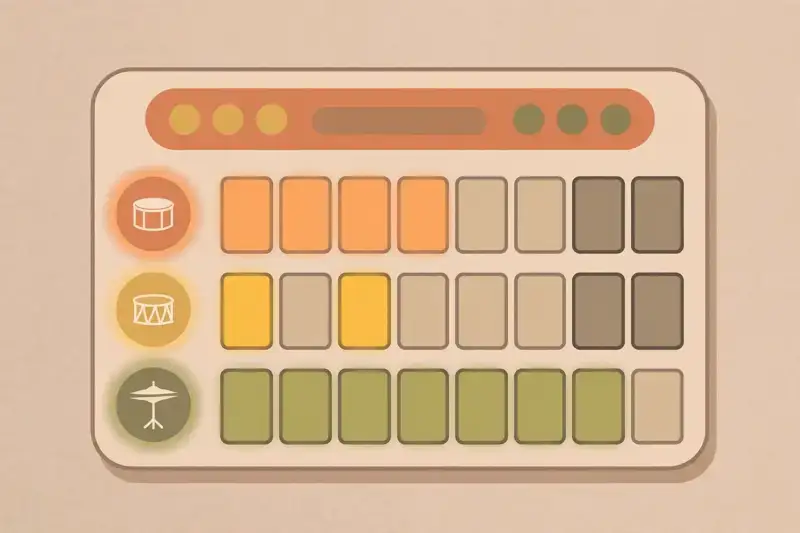
Every song starts with rhythm. Drums give every other sound its place to sit, which is why producers build the beat first and add everything else on top. A great groove with nothing else still feels like music; chords with no groove feel like homework.
The classic pattern: kick drum on beats one and three, snare on two and four, hi-hats ticking steadily between. That is the backbone of most popular music ever made. Program it, loop it, and feel how solid it is. Then start messing with it: move a kick, add an extra snare, swing the hi-hats.
Lesson 3
Here is a secret: a huge number of hit songs use the same four chords in the same order. Learn one progression and you can play hundreds of songs. Chords are just groups of notes that sound good together, and the DAW will show you which notes belong.
Start with a simple loop: four chords, one per bar, repeating. Pick a warm piano or synth sound. Do not overthink which chords; pick ones that sound good to your ear. Theory helps later, but your ear is the boss right now. If it sounds good, it is good.
Vary the rhythm of the chords rather than the chords themselves. Same four chords played as long whole notes feel dreamy; chopped into short stabs feel energetic. Rhythm transforms harmony more than new chords do.
Lesson 4
A melody is the part people remember and sing. The test is simple: can you hum it after one listen? If yes, it is a melody. If it is a blur of fast notes, it is showing off. The most famous melodies in history are simple enough for a child to sing.
Write melodies by singing, not by clicking notes with a mouse. Hum over your chord loop and record yourself, badly is fine. Then find those notes in the DAW. Your voice knows melodies your mouse does not. Keep phrases short, leave space between them, and repeat the good bits. Repetition is what makes a melody stick.
Stay mostly on the notes of your chords, with occasional visitors. The chord tones always sound right; the visitors add spice. Too many visitors and it is chaos. A few well-placed ones and it is genius.
Lesson 5
Bass connects the drums to the chords. It plays the root note of each chord in rhythm with the kick drum, and suddenly the whole track feels solid and expensive. Beginners skip bass; professionals never do. It is the difference between a demo and a record.
Keep it simple: one note per chord change, locked with the kick. You can get fancy later with runs and syncopation, but simple and solid beats fancy and messy every time. The bass should be felt more than noticed.
Lesson 6
A loop is not a song. Songs are buildings with rooms: intro, verse, chorus, verse, chorus, bridge, chorus, outro. Each section does a job. The verse tells the story, the chorus delivers the payoff, the bridge offers a surprise. Arrangement is what turns your eight-bar loop into three minutes.
The simplest arrangement trick: subtract before you add. Start sections with fewer elements and build up. Intro with just chords, verse adds drums, chorus brings everything. The listener feels the song growing, and growth is excitement.
Copy arrangements from songs you love. Count the bars of each section in your favorite track and use the same map. This is not cheating; it is how every producer learns. Structure is free to borrow.
Lesson 7
Beginners add sounds. Professionals remove them. Twenty tracks fighting for the same frequencies sounds muddy and small; five well-chosen sounds sound huge. Every new sound must earn its place by doing a job no other sound does.
The mute button is your best mixing tool. Mute each track one at a time and ask: does the song miss it? If not, delete it. What remains will be clearer, punchier, and more professional. Space is a sound too; silence between notes makes the notes hit harder.
This applies to notes as well as tracks. A simple part played with feeling beats a busy part played perfectly. Leave room for the listener's ear to breathe.
Lesson 8
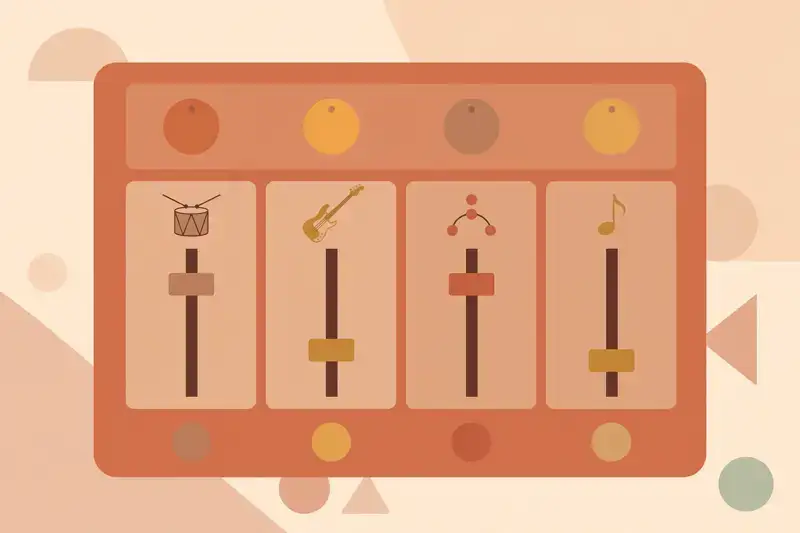
Mixing is just balance: every sound audible, nothing painful, the important stuff loudest. Start with volumes only, no effects. Get the drums, bass, chords, and melody sitting together with faders alone. Most "mixing problems" are actually volume problems.
Then pan: spread sounds left and right so they are not all piled in the middle. Keep kick, snare, bass, and lead vocal centered; push supporting sounds to the sides. Suddenly there is room for everything. Then EQ: cut muddy low frequencies from sounds that do not need them, so the bass has space.
Lesson 9
Reverb adds space, delay adds echo, compression evens out dynamics, distortion adds grit. These are powerful, which is exactly why beginners overuse them. Drown everything in reverb and the track sounds like it was recorded in a cave. Effects should enhance the sound, not replace it.
Learn one effect at a time, starting with reverb. A little room reverb glues sounds together; a lot washes them out. The rule for every effect: turn it up until you notice it, then back it off a bit. If the listener notices the effect before the music, there is too much.
Compression deserves special mention: it makes quiet parts louder and loud parts quieter, which makes tracks feel polished and consistent. Use gentle settings while learning. Squashed dynamics sound lifeless.
Lesson 10
Your ears get used to your own track and stop hearing its flaws. The fix: constantly compare against professional songs you love. Import a reference track into your DAW, match its volume to yours, and flip back and forth. The differences will shout at you: too much bass, dull highs, weak drums.
Reference at every stage: arrangement, mix, and final loudness. Pros do this on every record; it is not cheating, it is calibration. Your taste already knows what good sounds like. References let your ears borrow that knowledge.
Also listen on everything: headphones, laptop speakers, the car, a cheap Bluetooth speaker. If it sounds good everywhere, the mix is solid. If it only works on your headphones, keep mixing.
Lesson 11
The graveyard of music production is full of great eight-bar loops that never became songs. Finishing is a separate skill from starting, and it is the one that matters. A finished okay song teaches you more than ten unfinished great loops.
Set a deadline: one week per song, then export it no matter what. The pressure forces decisions, and decisions are what finishing is. Perfectionism is just fear with better branding. The song does not need to be great; it needs to be done.
Lesson 12
Here is the assignment: make a two-minute track this week. Drums, four chords, a hummable melody, simple bass, arranged in sections, mixed with volumes and panning, exported as an MP3. Play it for one friend. That is it. You are now a music producer.
It will not be great. That is expected and fine. Your first twenty songs are tuition, and every one teaches something the tutorials cannot. Save everything; in a year you will listen back and hear exactly how far you have come.
Then make another. The producers you admire are not more talented than you; they are just further along the same road. Start walking.
Graduation
You have the whole foundation: a DAW and headphones, drums first, four chords, hummable melodies, bass as glue, arrangement in sections, ruthless subtraction, volume-first mixing, gentle effects, constant referencing, and the discipline to finish. Everything else is refinement. The studio is open whenever you are.
Keep learning
This course is part of Starvard University, striving for greatness.