Starvard University · Social Skills
Small talk, parties, and not feeling awkward forever. Twelve plain-English lessons on conversation, confidence, and connecting with anyone. Social ease is a trainable skill.

The whole course in brief
The twelve lessons
Lesson 1
Everyone feels awkward in social situations. The confident person at the party, the smooth networker, your most outgoing friend: they all felt exactly what you feel. The difference is not talent. It is reps. Awkwardness is the feeling of a skill you have not practiced yet, and it fades every time you practice.
It helps to know about the spotlight effect. You think everyone notices your nervousness, your pause, your slightly weird comment. They do not. People are far too busy worrying about their own performance to audit yours. That thing you said that you replayed for three days? Nobody remembers it. The audience in your head is much larger than the one in the room.
So reframe the goal. You are not trying to be smooth. You are trying to be warm, and warm is easy: smile, be kind, be interested. Smoothness is optional. Warmth is the whole game, and nobody ever left a conversation thinking "that person was so smooth." They think "that person was so nice to talk to." Aim there.
Lesson 2
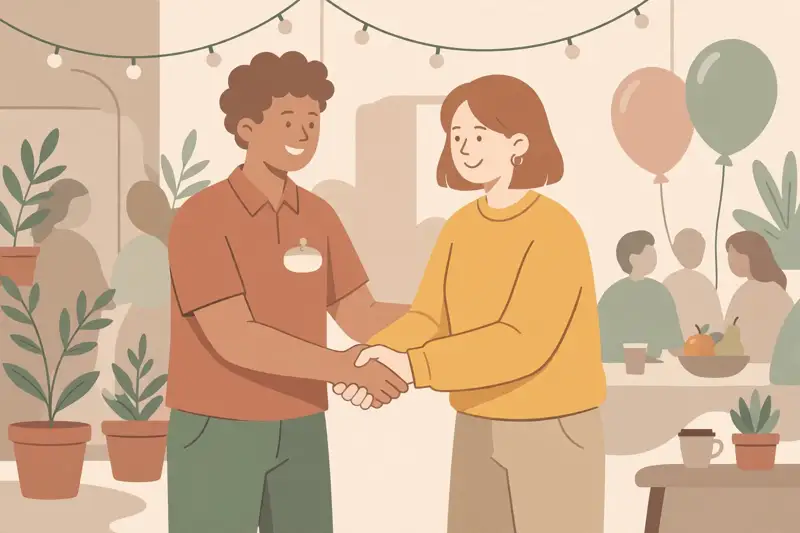
Remembering someone's name is a small miracle of attention. Use it and people light up. Forget it and the conversation limps. The good news: it is a technique, not a talent. When you hear a name, repeat it immediately: "Nice to meet you, Priya." That one repetition does half the work.
Then use it two more times in the conversation. "So Priya, what brings you here?" and later, "Great talking to you, Priya." Three uses locks it in for most people. If you blank anyway, own it cheerfully and early: "I am so sorry, your name slipped away from me." Asking twice is awkward. Pretending you know for an hour is worse.
Connect the name to something visual or meaningful. Priya who likes rock climbing. Tom with the red glasses. The sillier the association, the stickier it is. And when you leave, say the name one final time. Goodbye with a name feels personal. Goodbye without one feels like you never quite arrived.
Lesson 3
Small talk gets a bad reputation, but it is not the enemy. It is the on-ramp. Nobody starts a deep friendship with a deep question. They start with the weather, the event, the food, and build from there. The formula is simple: observe something, ask about it, build on the answer. "Great turnout tonight. How do you know the host?" Then listen, and ask the follow-up.
The follow-up question is the entire skill. Anyone can ask "what do you do?" Almost nobody asks "what is the most interesting part of that?" or "how did you get into it?" Follow-ups say: I am actually listening, and I want more. Two good follow-ups will take any conversation deeper than ten surface questions.
Have a pocketful of openers for different settings. At events: "What brings you here?" At work gatherings: "What are you working on that is exciting?" Anywhere: "Been up to anything fun lately?" Open questions beat closed ones. "Did you have a good weekend?" dies. "What did you get up to this weekend?" lives. Keep it light, keep it curious, and let the other person steer toward what excites them.
Lesson 4
Parties are easier with a plan. Arrive early. This sounds backwards, but the first twenty minutes are the golden window: small crowd, easy conversations, no closed circles yet. Arriving late means walking into a room of established groups, which is the hardest possible entry. Early birds get the friendships.
Give yourself a job. Offer to help the host, tend the drinks, take photos, watch the door. A job gives you a reason to approach anyone and a graceful exit from any conversation. It also makes you useful, and useful people get talked to. The host's helper meets everyone by default.
Work the edges first. People standing alone are usually relieved to be approached. Join open groups (people standing in a loose circle, facing outward) and avoid closed ones (tight circle, facing inward) until you are invited. And leave before you are exhausted. A graceful early exit, with goodbyes and a few new contacts, beats a drained midnight fade every time.
Lesson 5
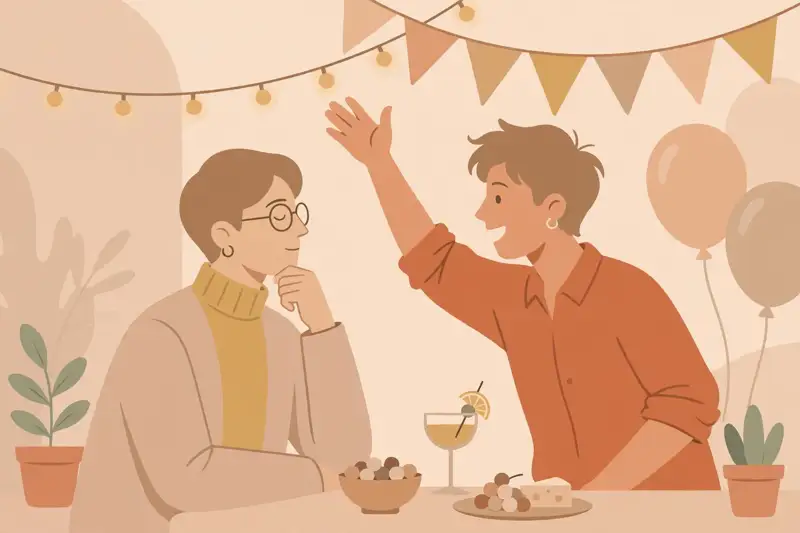
The most charismatic people in any room are rarely the best talkers. They are the best listeners. Listening well makes people feel fascinating, and people love whoever makes them feel fascinating. The bar is shockingly low: most people listen just long enough to plan their next sentence. Clear that bar and you stand out immediately.
Real listening has visible parts. Eye contact, nodding, small encouragers like "tell me more" and "what happened next?" Then the magic move: reflect back what you heard. "So you basically rebuilt the whole thing in a weekend?" Reflection proves you were actually there, and it gives them the joy of feeling understood, which is the rarest feeling in modern life.
Resist the three listening killers. Do not interrupt, even with excitement. Do not immediately top their story with yours ("oh that reminds me of when I..."). And do not problem-solve unless asked. Most stories want a witness, not a consultant. Ask "do you want advice or just to vent?" and you will instantly become someone's favorite person to talk to.
Lesson 6
Social fluency is mostly pattern recognition: noticing who is open, who is done, when to join, when to leave. The signals are consistent. Open people face outward, make eye contact, and leave space in their circle. Closed groups angle inward, talk quietly, and do not make room. Read the geometry before you approach.
Learn the exit cues so you never overstay. Glancing around, short answers, turning the body away, the phone check: these all mean "wrap it up." Take the hint gracefully and you become someone people are happy to see again. Miss the hint and you become someone people avoid. The graceful exit line is simple: "I am going to grab a drink, great talking to you."
Also read energy levels, including your own. Some rooms want high energy and laughter. Some want calm and depth. Match the room you are in. And know that one-on-one depth in a loud room is hard; suggest stepping outside or finding a quieter corner. Changing the setting often changes the whole conversation.
Lesson 7
The person who connects others becomes the most valuable person in the room. When you meet two people who should know each other, introduce them with context, not just names. "Priya, this is Tom. Tom just started a bakery. Priya, you were just talking about wanting better bread." A good introduction gives them an instant conversation.
Always include one interesting detail about each person. It gives the other something to grab onto and makes both people feel seen. "This is Jen, she runs marathons and just got back from Kenya" beats "this is Jen" by a mile. You are not just naming people. You are handing them a starting thread.
Then stay for the handoff. Do not introduce and vanish. Hang around for a minute, help the conversation start, then gracefully step away. And introduce across groups all night: the newcomer to the regulars, the quiet person to the talkative one. Connectors never lack invitations, because every room is better with them in it.
Lesson 8
Interesting people are usually just prepared people. Keep three good stories in your pocket: something funny that happened to you, something interesting you learned recently, and something you are excited about right now. When conversation stalls, you have somewhere to go. Prepared beats brilliant.
Good stories are short, specific, and have a point. Two minutes max. Include one vivid detail and skip the throat-clearing. "The funniest thing happened at the airport last week" is a better opening than a ten-minute preamble about which terminal. End with the punchline or the insight, then hand it back: "Has anything like that ever happened to you?"
Collect stories deliberately. Notice the funny and interesting things in your week and file them away. Read widely, try new things, talk to unusual people: a life with input produces stories as a byproduct. And retire stories that stop landing. Your pocket repertoire should rotate like a good playlist.
Lesson 9
Before you say a word, your body has already introduced you. Open posture, relaxed shoulders, and a genuine smile say "safe and friendly." Crossed arms, a hunched phone-stare, and a furrowed brow say "do not approach." You cannot out-talk a closed body. Fix the body first and the words get easier.
The phone is the biggest body-language problem in modern social life. A phone in your hand is a wall. Put it away, in your pocket, face down, and watch how much more approachable you become. People do not approach people who look busy. Looking available is half of being social.
Use the small signals deliberately. Eye contact: enough to show attention, not enough to stare. Nodding while listening. Turning your whole body toward the person speaking. A warm, brief touch on the arm when greeting a friend. These micro-signals broadcast warmth louder than any words, and they are entirely learnable.
Lesson 10
Most connections die between meetings. You have a great chat at the party, both say "we should hang out," and neither ever follows up. The fix takes thirty seconds: within 48 hours, send the text. "Great meeting you last night. That story about Kenya was amazing. Coffee next week?" Specific, warm, with a next step.
Reference something from the conversation. It proves you were listening and gives them an easy reply. Send the article you mentioned, the contact you promised, the photo from the night. Follow-through is rare enough that it feels remarkable. Be the person who actually sends the thing.
Then suggest the specific next meeting. "We should hang out" is a wish. "Are you free for coffee Thursday?" is a plan. One concrete invitation beats ten vague intentions. Most friendships that exist today are here because someone sent the follow-up text. Be that someone.
Lesson 11
Introversion is not a social deficit. It is an energy style. Introverts often make the best conversationalists because they listen deeply and prefer real talk to performance. This course is not about becoming an extrovert. It is about building the skills to connect on your own terms.
Play to your strengths. Skip the giant party and host the dinner for four. Choose depth venues: book clubs, small groups, one-on-one coffees. You do not need fifty acquaintances. Five real friends will make you happier than a hundred surface contacts, and introverts are built for the deep end.
Budget your energy honestly. Know your limit, plan recovery time, and leave events before you hit empty. There is no prize for staying until you are miserable. A graceful early exit preserves the good feeling and makes you want to go out again. Protect the battery and the social life sustains itself.
Lesson 12
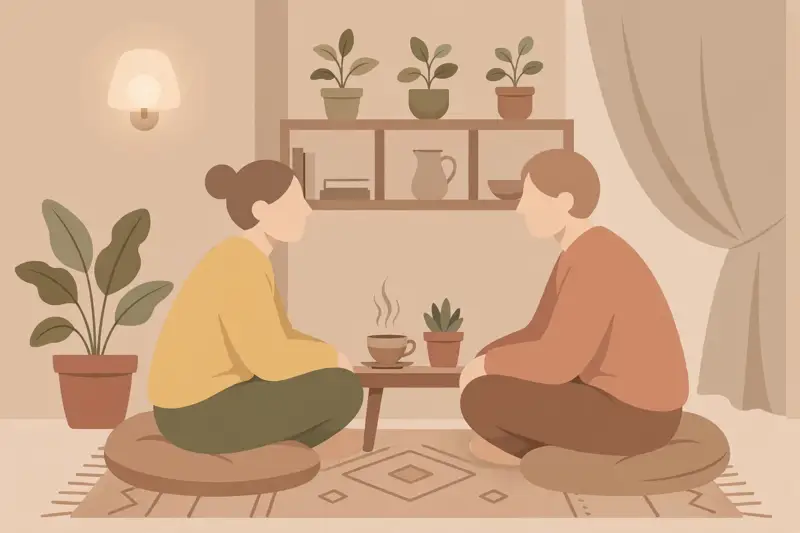
Here is the final lesson and the only homework that matters: have one hundred conversations. With cashiers, neighbors, coworkers, strangers at events. Small ones count. The goal is not one hundred deep friendships. It is one hundred reps of the skills in this course: openers, follow-ups, listening, exits, names.
Track it loosely. A note on your phone, a tally, whatever works. Watch what happens around conversation thirty: the opener stops feeling forced. Around sixty: you start enjoying it. By one hundred, you are a different social animal. Not because you became someone else, but because you practiced being yourself in front of people.
Start today. Compliment the barista genuinely. Ask your coworker the follow-up question. Text the acquaintance about coffee. Every socially fluent person you admire once stood exactly where you are, feeling exactly as awkward, and did the reps anyway. Your hundred starts with one hello.
Graduation
Awkward is normal. Names can be learned. Small talk has a formula, listening is the superpower, and your body speaks first. Arrive early, introduce people, keep three stories ready, follow up in 48 hours, and do your hundred reps. Social ease is not a personality trait. It is a practiced skill. Go practice.
Keep learning
This course is part of Starvard University, striving for greatness.