Starvard University · Critical Thinking
The world is full of people trying to fool you, and your own brain leads the list. This course teaches you to spot bad arguments, bad numbers, and your own blind spots.

The whole course in brief
The twelve lessons
Lesson 1
Nobody is born a clear thinker. Clear thinking is a set of habits, and habits can be built at any age. The fact that you are reading this course already puts you ahead of most people, because most people never examine how they think at all.
Here is the uncomfortable starting point: your brain was not built for truth. It was built for survival and social belonging. It takes shortcuts, follows the tribe, and defends your ego. Critical thinking is the learned ability to override those defaults when accuracy matters more than comfort.
This course gives you the toolkit: spotting biases, reading numbers honestly, evaluating arguments and sources, reasoning from first principles, and changing your mind gracefully. Twelve lessons, all practical, zero philosophy degree required.
Lesson 2
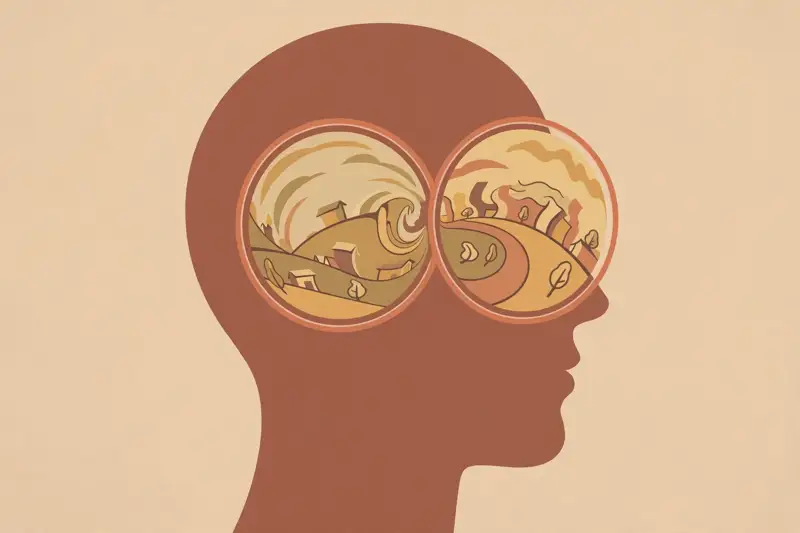
Cognitive biases are predictable errors in thinking, and everyone has them, including experts, including you reading this. They are features of a fast brain, not signs of stupidity. The danger is not having biases. It is not knowing you have them.
Meet the greatest hits. Confirmation bias: seeking info that agrees with you. Availability bias: judging likelihood by what is memorable, which is why plane crashes feel common and car crashes feel rare. Anchoring: the first number you hear warps every number after. Sunk cost: staying in a bad situation because you already invested. Survivorship bias: learning from winners while ignoring the thousands who did the same thing and failed.
You cannot delete biases. You can build tripwires. When you feel very sure, ask what you would need to see to change your mind. When a story feels vivid, ask for the base rate. When you want to quit or stay, ask what you would advise a friend. Tripwires turn biases from blind spots into checkpoints.
Lesson 3
Confirmation bias deserves its own lesson because it is the master bias, the one that powers all the others. Your brain treats beliefs like possessions. Threats to a belief feel like threats to you. So you seek confirming evidence, dismiss disconfirming evidence, and hang out with people who agree.
Watch it in the wild. Two people read the same news event and each finds proof they were right all along. A dieter notices every story about a diet working and skips the ones about it failing. An investor Googles the stock ticker plus bull case instead of bear case. The information diet shapes the belief, and the belief shapes the information diet.
The antidote is deliberate disconfirmation. Actively seek the strongest argument against your view. Follow smart people you disagree with. Ask: what evidence would prove me wrong, and have I looked for it? Steel-manning the other side, which gets its own lesson, is the advanced version of this habit.
Lesson 4
Two things can move together for three reasons. A causes B. B causes A. Or C causes both. Most bad arguments you will ever hear confuse these. Ice cream sales and drowning deaths rise together every summer. Ice cream does not cause drowning. Heat causes both.
The classic traps: the third variable, reverse causation, and coincidence. Cities with more churches have more crime. The third variable is population. People who go to therapy are more anxious than people who do not. Reverse causation: anxious people seek therapy. And sometimes two lines just wiggle together by chance, especially in small samples.
When someone claims a cause, ask three questions. Could it be reversed? Could something else cause both? Would this hold up in a controlled test? If the answer to all three is unclear, the claim is a hypothesis, not a fact. Treat it that way.
Lesson 5
Numbers feel objective, which makes them perfect camouflage for nonsense. Every statistic is a choice: what to count, how to count it, and what to compare it to. Your job is to find the choices.
Learn the greatest hits of number trickery. Cherry-picked time ranges: a chart that starts at a dip or a peak. Relative versus absolute: a 100 percent increase from 1 to 2. Averages hiding distribution: the average person in a room with a billionaire is a millionaire. Survivorship in data: the fund's returns only count the funds that survived. And the missing denominator: 10,000 complaints sounds scary until you hear it is out of 50 million customers.
The defense is a short checklist. Compared to what? Over what time period? Who is missing from the data? What is the absolute number? If a claim cannot survive those four questions, it is marketing, not information.

Lesson 6
Bad arguments usually win by being loud, confident, or emotional, not by being right. Learn to separate the packaging from the contents. A claim shouted by a confident person in a suit is still just a claim.
Know the common fallacies by name so you can spot them live. Ad hominem: attacking the person instead of the argument. Straw man: attacking a weak version of the other side's view. False dilemma: pretending there are only two options. Appeal to authority: an expert said it, so it must be true, even outside their field. Slippery slope: one step will definitely cause ten worse steps. Whataboutism: dodging with a different accusation.
The test of a strong argument is simple: what is the claim, what is the evidence, and does the evidence actually support the claim? Strip away the tone, the credentials, and the applause lines. What is left is the argument. Judge that.
Lesson 7
In the age of screenshots and viral threads, the source is the story. Before you believe a claim, spend 30 seconds on provenance: who said it, and where did they get it?
Red flags: no named source, just studies show. A screenshot of text instead of a link. A claim that only appears on sites that already agree with it. An expert cited without a name or credential. A headline that the article itself does not support. And the big one: the claim confirms exactly what you hoped was true, which should raise your standards, not lower them.
The 30-second check: search the exact claim in quotes. Check whether reputable outlets cover it. Look for the original study or data, not someone's summary of it. Read the about page of an unfamiliar site. Most misinformation dies at step one. Make the check a reflex and you become nearly unfoolable.
Lesson 8
A straw man is the weak version of your opponent's argument, easy to knock down. A steel man is the strongest version, the one its smartest defender would make. Most debates are two people knocking down each other's straw men and learning nothing.
Steel-manning is simple and brutal: before you argue against a view, state it so fairly that its supporters say, yes, that is what I mean. Only then are you allowed to disagree. You will find two things happen. Sometimes the view is stronger than you thought. Sometimes, in building it fairly, you discover exactly where it breaks.
This is the single highest-leverage thinking habit in the course. It defuses fights, earns you credibility with people who disagree, and, most importantly, it is how you find out when you are wrong. You cannot steel-man and stay smug. The exercise forces honesty.

Lesson 9
Most thinking is reasoning by analogy: this is like that, so do what worked before. First principles thinking goes deeper: what is actually true here, from the ground up? Strip away assumptions and rebuild.
The method: ask what you know is true, what you are assuming, and what would have to be true for the standard approach to be wrong. Then reason upward from the physics, the math, or the human behavior involved. This is how new solutions appear in fields where everyone copies everyone else.
You do not need it for everything. Use analogy for routine decisions. Use first principles for the big ones: career moves, business ideas, major purchases, life direction. Ten minutes of what is actually true here can beat ten years of copying what everyone does.
Lesson 10
Almost nothing in life is certain, but we talk as if everything is. This project will succeed. That investment is safe. Probabilistic thinking replaces yes and no with how likely: about 70 percent, maybe 20 percent. It is a more honest map of reality.
The payoff is better decisions. A 70 percent chance of success with a huge upside is worth taking. A 90 percent chance of a small win with a 10 percent chance of ruin is not. Expected value, the probability times the payoff, is the math of good bets. You do not need the formula memorized. You need the habit of asking: what are the odds, and what is at stake?
Calibrate by keeping score. When you predict something, write down your confidence. Later, check. Most people discover they are overconfident, and the practice of scoring fixes it fast. Thinking in bets makes you humbler, sharper, and much harder to fool.
Lesson 11
We treat changing your mind as weakness. It is the opposite. Updating your beliefs when the evidence changes is the entire point of having a brain. The strongest thinkers in history are the ones who changed their minds in public and survived.
The obstacle is identity. When a belief becomes part of who you are, contradicting evidence feels like an attack. The fix is to hold beliefs lightly and identity separately. You are not your opinions. You are the person who updates opinions. Make that the identity and changing your mind becomes a win, not a loss.
Practice small. Keep a list of things you changed your mind about this year. Say I was wrong about that out loud sometimes. Reward yourself for updating, not for being right the first time. People who update fast learn fast, and learning fast compounds.

Lesson 12
You now have the full kit. Let us compress it into a pocket checklist you can run on any claim, article, pitch, or argument. One: what is the actual claim, stripped of packaging? Two: what is the evidence, and does it support the claim? Three: what are my biases here, and what would change my mind? Four: correlation or causation, and what is the third variable? Five: check the numbers, the source, and the steel-manned other side.
Use the full checklist for big decisions and high-stakes claims. Use a light version, claim, evidence, source, for everyday noise. The goal is not to become cynical. Cynicism is lazy. The goal is to become accurately calibrated: appropriately skeptical of weak claims, appropriately confident in strong ones.
Final habit: write things down. Thinking on paper beats thinking in your head because paper does not let you blur the hard parts. A one-page decision memo, a pros and cons list with probabilities, a journal of predictions. Clear writing is clear thinking made visible. Start today.
Graduation
You now have the toolkit: name your biases, escape the confirmation trap, separate correlation from causation, read numbers honestly, judge arguments by content, check sources in 30 seconds, steel-man the other side, reason from first principles, think in probabilities, and change your mind with pride. The world will keep trying to fool you. It will find you much harder to fool now.
Keep learning
This course is part of Starvard University, striving for greatness.